01
Stored methods only
Compare fixation sources that were actually calculated and stored in the project.
03 / Analyze · Robustness Lab
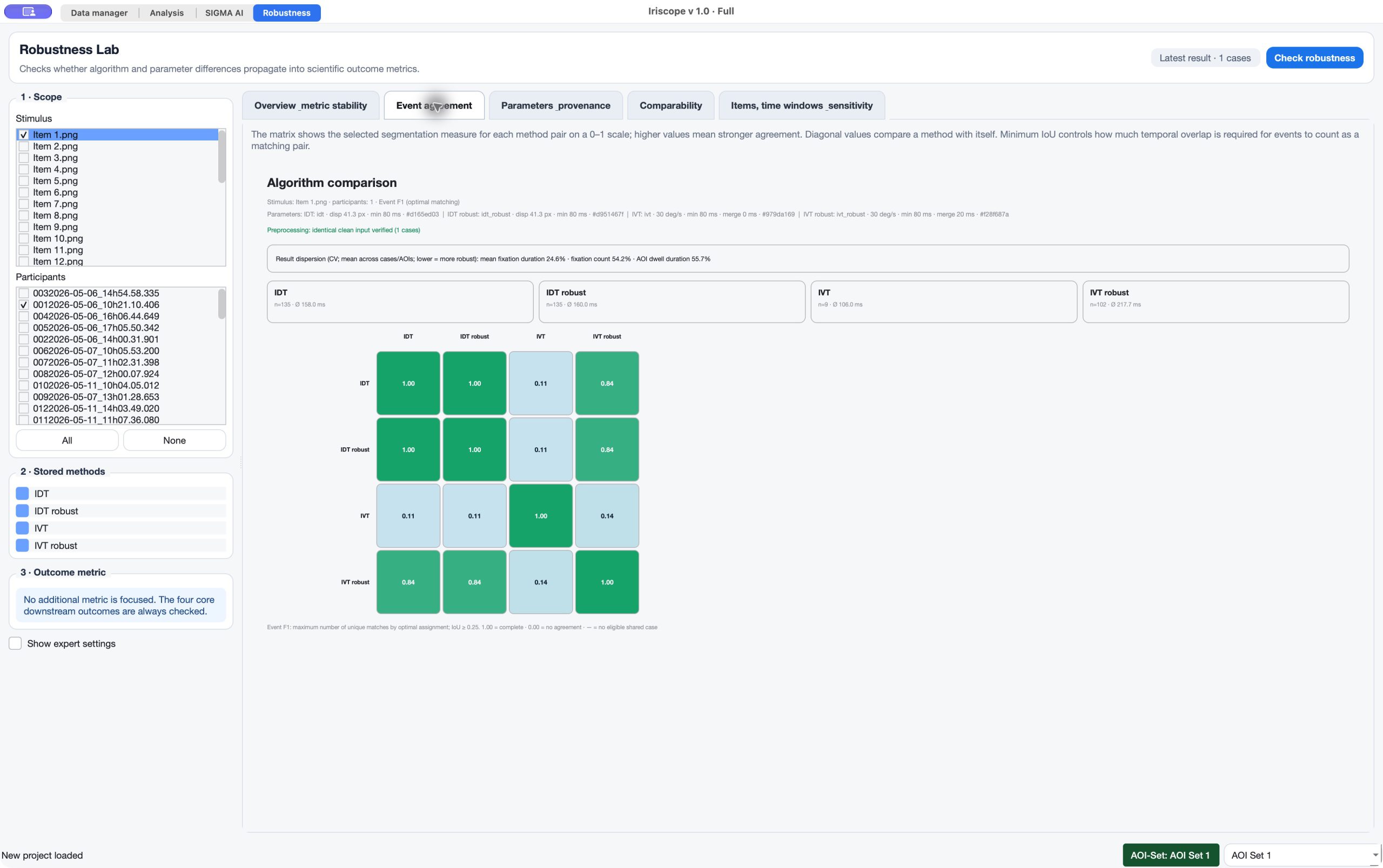
Iriscope compares stored fixation methods and makes their impact on eye-movement events and downstream metrics visible — as a methodological robustness check, not an inferential result.
The capability
Use this workflow for the part of the research question it addresses.
01
Compare fixation sources that were actually calculated and stored in the project.
02
Inspect optimal event matching, temporal overlap, count and duration similarity.
03
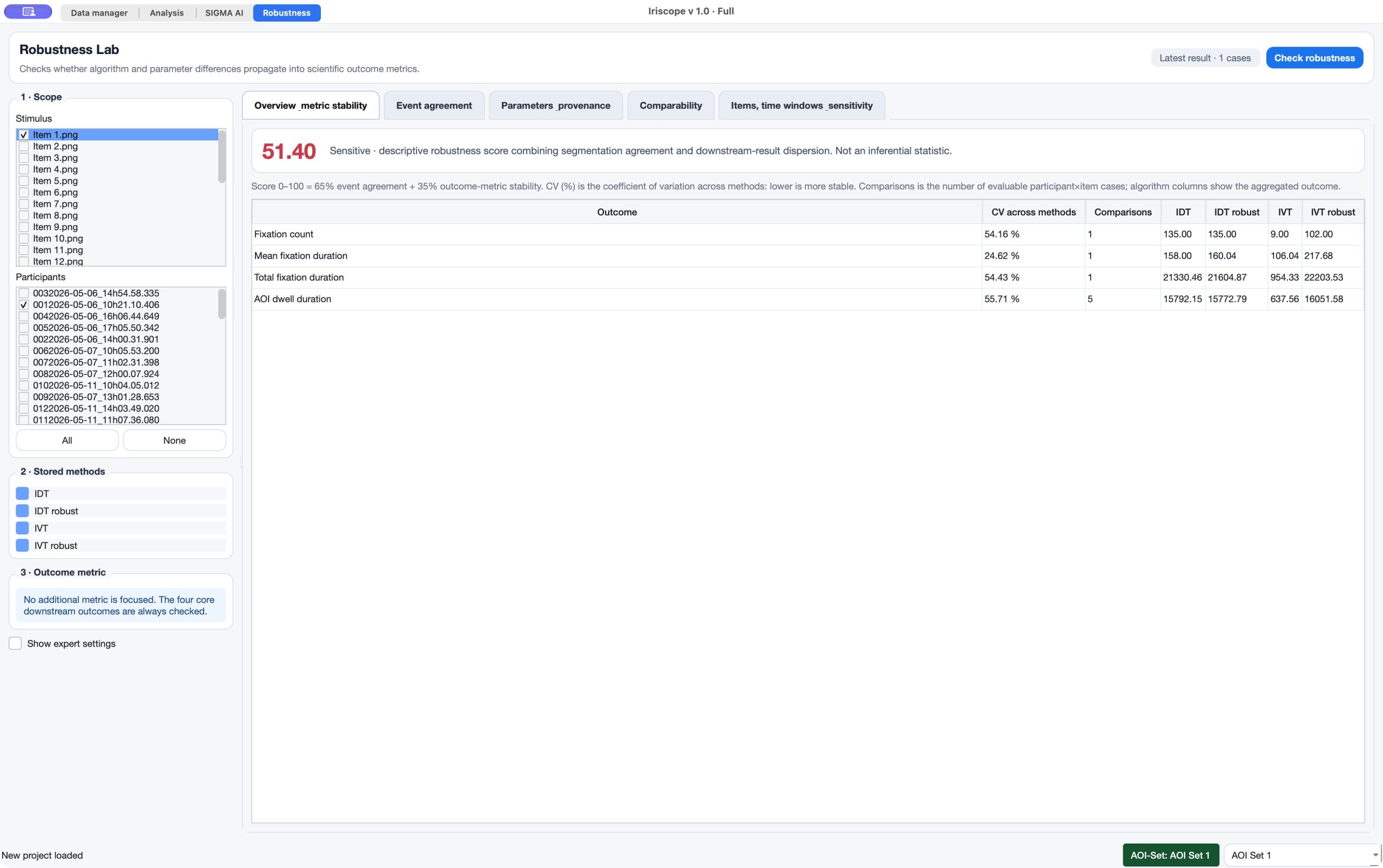
See whether counts, durations, AOI dwell and a selected metric stay stable.
04
Exclude cases with mismatched input signatures rather than hiding the difference.
In the application
Keep the relevant material, definitions and review decisions connected at each step.
Method context
The relevant settings, prerequisites and interpretation stay attached to the workflow.
A robustness score is a guide, not a statistical verdict.
The combined score is explicitly descriptive. It combines event agreement with stability across selected outcomes so researchers can investigate method sensitivity; it does not replace an inferential analysis or turn algorithms into ground truth.
Connect the workflow
Tell us about the material, recording and result you need to inspect. We can identify the appropriate product and method scope.